

Blog
Custom Sandwich Boxes: Packaging Guide for Food Brands
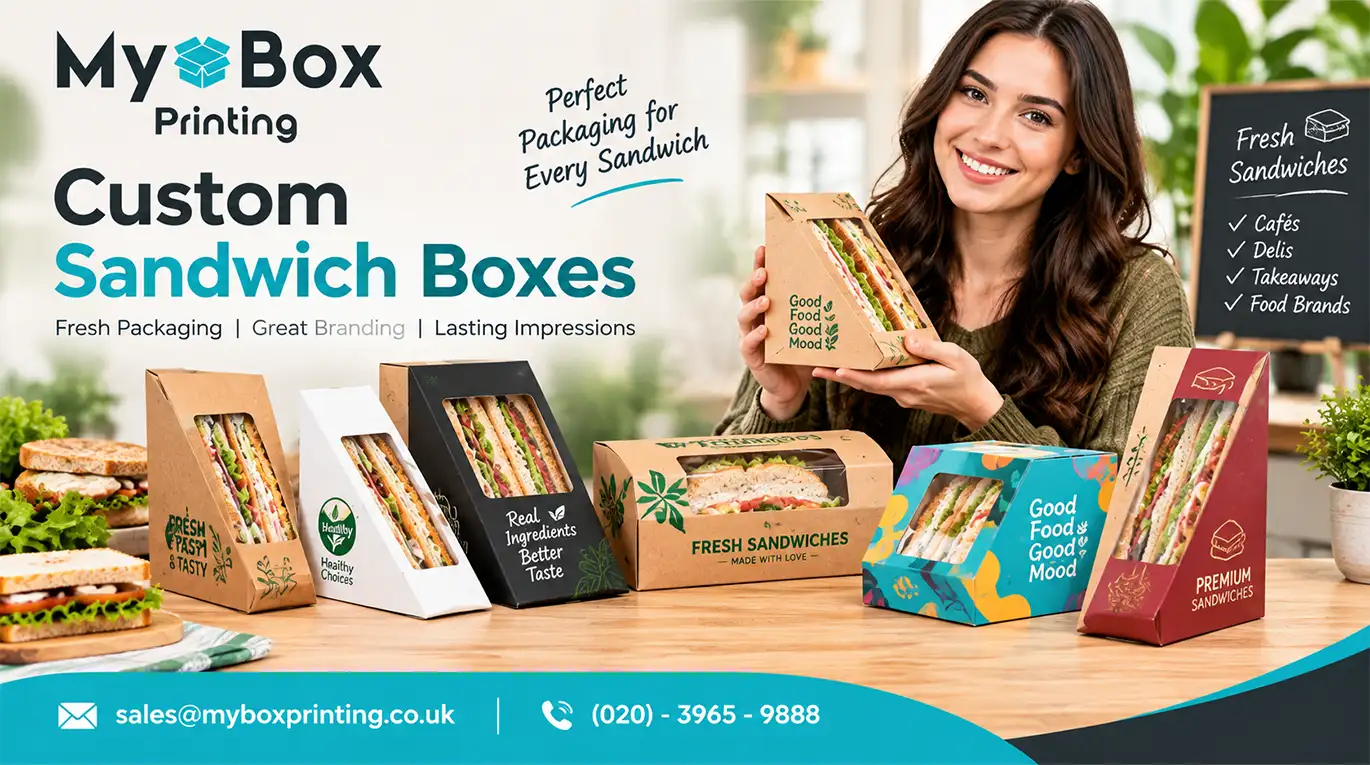
Sandwiches don’t leave much room for error. A soggy bottom, a squashed filling or a lid that pops open mid-delivery can undo an otherwise excellent product in seconds, which is exactly why custom sandwich boxes have become such a priority for cafés, delis and food-to-go brands across the UK. The right box keeps everything intact, but it also does something a plain wrapper never could: it makes a quick, everyday purchase feel like it came from somewhere that cares about quality.
Sandwiches occupy a strange middle ground in food packaging. They’re grab-and-go by nature, yet customers still judge them on presentation, freshness and how well they’ve survived the journey from counter to lunch break.
Why Sandwich Packaging Deserves More Thought Than It Gets
Plenty of food businesses treat sandwich boxes as a purely functional purchase, buying whatever’s cheapest from a wholesale catalogue. That approach tends to backfire once customers start noticing the difference between a box that protects their lunch properly and one that leaves it a mess by the time they open it.
Custom sandwich boxes solve two problems at once. They keep bread, fillings and sauces where they’re supposed to be, and they give a brand visibility every time someone carries one through an office, a train station or a park.
Businesses that skip proper packaging often don’t realise how much it’s costing them until customers start choosing a competitor whose boxes simply hold up better.
The Real Cost of Poor Packaging Choices
A sandwich that arrives crushed or leaking rarely gets a second chance with that customer. Even if the sandwich itself was made well, the packaging failure becomes the story they remember and tell others about.
Replacing damaged orders, dealing with complaints and losing repeat custom all cost considerably more over time than investing properly in packaging that does its job from the start.
Keeping Sandwiches Fresh From Counter to Customer
Freshness is the single biggest challenge sandwich packaging needs to solve. Bread dries out quickly if a box seals too tightly without any airflow, yet it turns soggy just as fast if moisture gets trapped inside.
Custom sandwich boxes address this through thoughtful use of ventilation, appropriate liners and materials that manage condensation rather than ignore it. Getting this balance right matters enormously for deliveries, where a sandwich might sit in a bag for twenty minutes or more before reaching someone’s desk.
Choosing the Right Structure for Different Fillings
Not every sandwich needs identical packaging. Wet fillings like egg mayonnaise or tuna benefit from slightly more structural rigidity and moisture-resistant lining than drier options like a simple cheese and pickle.
Businesses offering a varied menu often benefit from working with a packaging supplier who understands these differences, rather than using one generic box style across every product regardless of filling type.
Building Brand Recognition Through Everyday Packaging
Sandwiches are bought constantly, which makes their packaging one of the most frequent touchpoints a food brand has with its customers. Custom sandwich boxes turn that frequency into a genuine marketing advantage.
Consistent branding, colour schemes and typography across every box help customers recognise a business at a glance, whether it’s sitting on a desk, in a shop window, or being carried down the street. Over time, that repeated exposure builds recall far more effectively than most paid advertising.
Standing Out in a Crowded Lunch Market
High streets and office districts across the UK are saturated with sandwich options, from major chains to independent cafés. A distinctive box design gives smaller businesses a way to compete visually against bigger, better-resourced competitors.
Simple design choices, a bold colour, a confident logo placement, or a recognisable window cut-out, often do more to build brand presence than customers consciously realise.
Sustainability Has Become a Genuine Expectation
Customers buying lunch daily notice packaging waste more than most, simply because of how frequently they interact with it. Choosing recyclable, compostable or FSC-certified materials signals real environmental responsibility rather than a passing marketing trend.
Food-safe, water-based inks matter particularly here, given how close sandwich packaging sits to the food itself throughout the entire eating experience. Clear labelling explaining how to dispose of the box properly adds a small but meaningful layer of customer trust.
Meeting Expectations Without Losing Structural Strength
There’s an assumption that eco-friendly packaging automatically performs worse structurally. That gap has closed considerably in recent years, with recyclable board now capable of matching the rigidity and moisture resistance of traditional materials when specified correctly.
Brands that get this balance right tend to appeal to a wider customer base without compromising on how well their packaging actually protects the food inside.
Turning Sandwich Boxes Into a Marketing Tool
A sandwich box doesn’t need to stop working once lunch is finished. Custom sandwich boxes frequently include printed QR codes linking to loyalty schemes, online ordering or seasonal promotions, extending the brand relationship beyond a single purchase.
Seasonal designs tied to specific times of year, back-to-office promotions or limited-edition menu items give regular customers a reason to notice the brand again, even after buying from the same place dozens of times.
Encouraging Repeat Custom Through Small Details
Simple touches, a thank-you note printed inside the lid, a small illustration, or a QR code offering a discount on the next visit, cost very little but noticeably improve how customers feel about a brand they already buy from regularly.
Businesses that invest in these small details often see stronger loyalty than those relying purely on product quality alone.
Final Thoughts and Next Steps
Sandwich packaging boxes carries more responsibility than its everyday nature suggests. Custom sandwich boxes need to protect freshness, reinforce brand recognition, meet sustainability expectations and continue working as a marketing tool long after the sandwich itself is gone.
Food brands that treat packaging as a genuine part of the product, rather than an afterthought bought purely on price, consistently build stronger customer loyalty and stand out more clearly on busy high streets. If your current packaging isn’t doing that work, it’s worth a proper rethink.
Ready to upgrade your sandwich packaging? Get in touch today to discuss custom sandwich boxes built around your menu, your brand and your customers.